

EU unveils new biotech plan to boost its global competitiveness and close gap with China, US
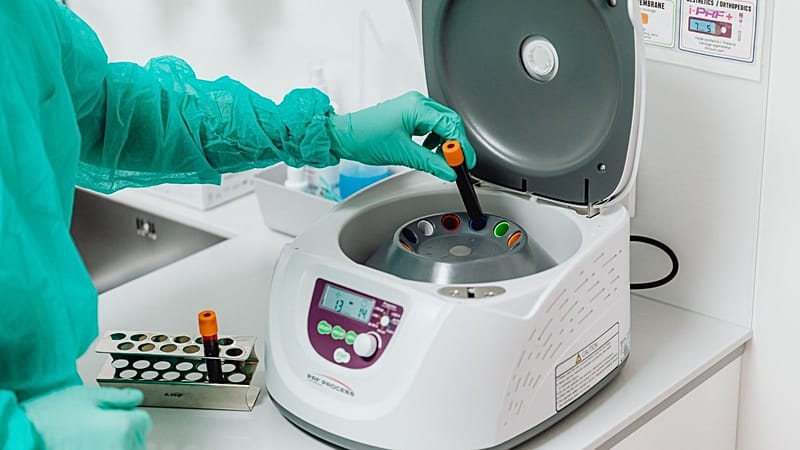
The new Biotech Act, presented by the European Commission, aims to set up a framework that helps biotechnology reach the market faster, improving the bloc’s competitiveness over China, and the United States.
The Commission on Tuesday acknowledged in its proposal that the European Union (EU) lags behind other global regions when it comes to turning its science and innovation into commercially viable products and large-scale manufacturing.
“We need a Biotech Act, which should create a hub for making Europe again a global powerhouse by creating an industrial, financial, and regulatory environment that is able to deliver this,” Health Commissioner Olivér Várhelyi said during the proposal’s presentation.
By promoting a sort of “made in Europe” approach, the Act aims to support the industry, speed up development and market entry of biotech products, and reward those projects that strengthen Europe’s industrial base.
From more financing to extended patent protection, here are the main measures the EU is offering countries to stay in the region.
More money and easier access
Over the last decade, the EU biotechnology industry has grown more than twice as fast as the overall EU economy and is one of the most economically productive industries, according to the European Commission.
However, in that same period, health‑biotech venture capital investment in the United States reached about €219 billion, compared with €25 billion in the EU.
The Biotech Act introduces a new tool, the “Health Biotech Investment Pilot,” to be set up with the European Investment Bank Group and other partners.
It aims to mobilise very large amounts of capital – including EU public money, national schemes, and public investors. The goal is to get about €40 billion per year for the next decade to support companies in the EU.
At the same time, projects under the Biotech Act will receive “particular consideration” under existing funding tools, mainly InvestEU, cohesion policy tools, and the new European Competitiveness Fund in the new EU long-term budget 2028-2034.
Cutting red tape
To facilitate the work of companies in Europe, the proposal shortens and simplifies clinical trial procedures so that manufacturers can bring products to market faster – especially for multinational trials and advanced medicinal products (ATMPs), which include gene, cell, and tissue-based therapies.
Over the last decade, the share of European clinical trials fell from 22 per cent in 2013 to 12 per cent in 2023, while China’s share rose from 5 to 18 over the same period, according to the Commission.
Currently, the EU has longer clinical trial approval timelines than competitors such as the United States, China, and Japan. Multinational clinical trials in the EU take about 113 days on average for a decision, while in most countries the process typically does not exceed around 60 days.
Extended intellectual protections
Beyond funding tools, the proposal adds other incentives aimed at keeping research and development (R&D) and manufacturing in Europe. These include 12 additional months of extra protection for certain innovative medicines developed and authorised under EU law, on top of existing patent protection.
The Act also introduces regulatory sandboxes for novel health biotech products, allowing manufacturers to test innovations under controlled conditions outside existing frameworks to accelerate the development of cutting-edge technologies.
Strengthening Europe’s industry
Finally, it creates the labels “strategic” and “high-impact strategic” for health biotech projects carried out in EU-based facilities whose infrastructure and skills strengthen the bloc’s industrial base.
The proposal defines these as projects that materially reinforce the EU’s capabilities along the whole value chain, from research and clinical development to manufacturing and deployment.
Examples include large-scale biotech development accelerators and testing infrastructures, specialised centres for advanced therapies, and biodefence-relevant projects.
The proposal is for member states and the Commission to treat these projects as priorities when planning funding and infrastructure, both at the EU and the national level.
Today