

New investments push Trans-Caspian Corridor into its next phase
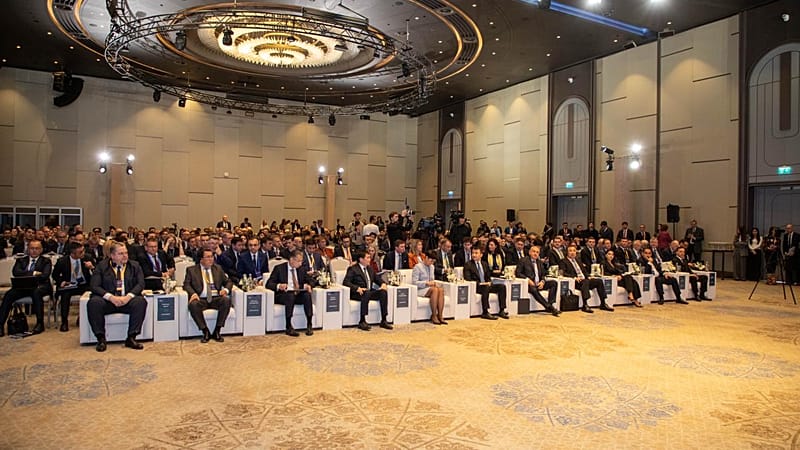
A new set of infrastructure commitments is set to accelerate development of the Trans-Caspian Transport Corridor, the route linking Europe with the South Caucasus and Central Asia.
The corridor has become one of the fastest-growing alternatives to traditional East-West trade connections and is seen as a way to reduce exposure to vulnerable or politically constrained routes.
A cross-regional investors meeting in Tashkent brought European institutions, South Caucasus partners, and Central Asian governments together to move the corridor from plans to financed projects.
The gathering produced new investment packages, technical programmes, and early signs that private operators increasingly view the route as a workable option for long-distance freight.
Officials emphasised that the corridor is no longer defined by long-term aspirations, but by decisions already taken on rail, port, and digital upgrades across several countries.
Many also said that the real turning point will come when coordinated reforms begin to shave days off border procedures, digital systems operate across borders, and new maritime capacity removes constraints on Caspian crossings.
Europe’s push for diversification
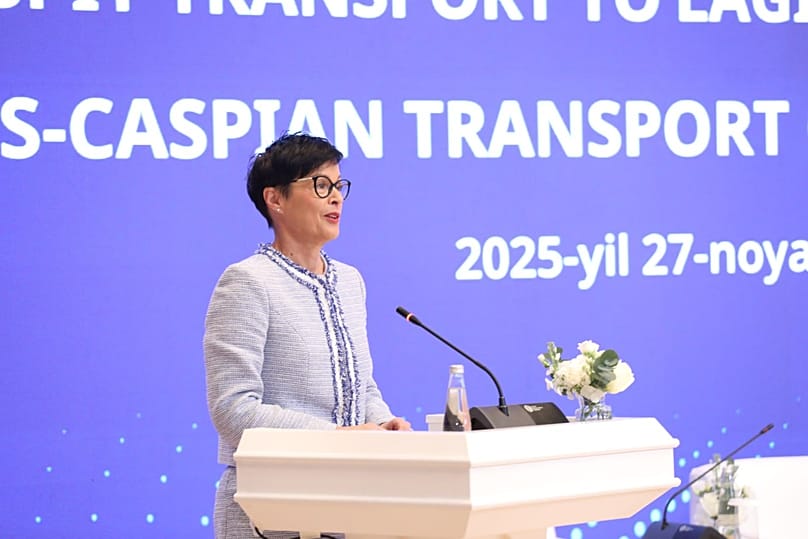
European Commissioner for Enlargement Marta Kos said the corridor is gaining strategic importance as Europe seeks more resilient trade routes. She told participants that long-standing dependencies have already proved fragile and that diversification is critical for Europe’s economic security.
“Our goal is to bring back some of the reality that existed centuries ago when Central Asia was the natural gateway between continents,” she said. “We have all learned how quickly dependencies can turn into risks and how important it is to have more than one viable route.”
She pointed to shifting business behaviour and noted that freight volumes along the Middle Corridor have already multiplied since 2022, with the potential to triple again by 2030 if investments close critical gaps.
European officials argue that the Middle Corridor offers a practical midpoint between existing maritime lines and congested northern routes, with the potential to become a long-term fixture in Europe’s supply-chain planning.
Industry representatives echoed this view, saying that resilience and lead-time reliability are now more important than pure distance. Importers in manufacturing and electronics have increased enquiries about routes that bypass politically sensitive or heavily congested corridors.
Financing shifts from pledges to real projects
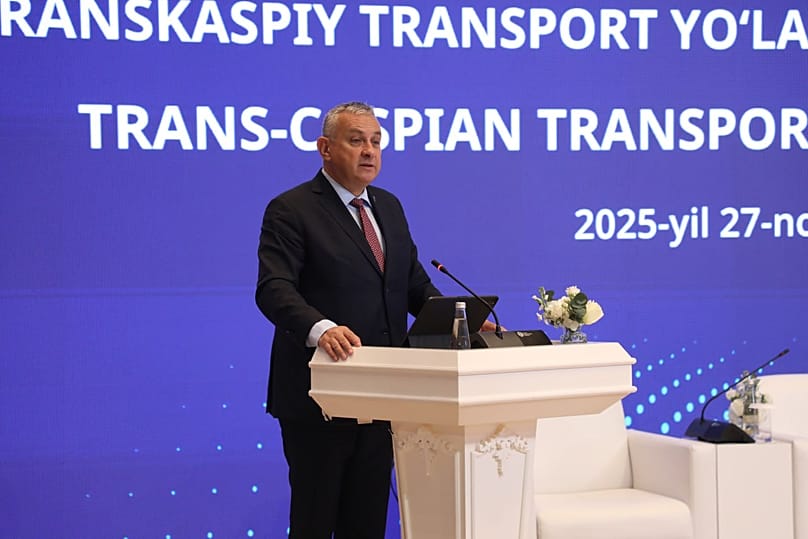
European Commissioner for International Partnerships Jozef Síkela said that commitments made under the EU’s Global Gateway framework are now translating into tangible work.
“About one quarter of the initial ten-billion-euro pledge has already turned into real projects,” he said. The corridor, he argued, will only function at scale when infrastructure upgrades are matched by harmonised procedures and digital customs systems that reduce border delays.
Lenders present in Tashkent noted that several countries have now reached the stage where feasibility studies, environmental reviews, and tender preparation can begin simultaneously.
The World Bank, EBRD and EIB all pointed to a growing pipeline of projects entering the pre-financing stage, including port expansion in Aktau, new rail links in Kazakhstan, and multimodal nodes in Uzbekistan and Georgia.
International financial institutions stressed that the corridor’s viability depends on reducing fragmentation. Infrastructure loses value if customs procedures remain inconsistent or if digital systems cannot exchange data. Coordinated financing, they said, is now essential.
Kazakhstan accelerates major upgrades
Kazakhstan, which hosts the longest stretch of the Middle Corridor, says it is speeding up rail and maritime investments.
Satzhan Ozbekov of the Ministry of Transport said the country has completed a second track on more than 800 kilometres of railway from the Chinese border to central regions. A bypass around Almaty is nearing completion and expected to ease congestion on the busiest section of the entire route.
More than 1,700 kilometres of existing rail lines are being modernised, alongside 4,500 kilometres of new and upgraded rail infrastructure. The Caspian Sea crossing remains the most constrained segment. Kazakhstan and Azerbaijan are introducing new super ferries able to carry up to 120 wagons — two full trains — significantly reducing handling times.
Transit volumes between Kazakhstan and Uzbekistan rose by around 10% in the first nine months of the year, and a third railway border crossing is planned for next year.
Uzbekistan outlines its priorities
Uzbekistan’s Deputy Minister of Transport, Jasur Choriev, said the route has moved from concept to strategic reality. He noted that Uzbekistan is investing in new rail and road networks and preparing multimodal links designed to serve the region for decades.
“We are building infrastructure that will last for many years and that will serve not only Uzbekistan but the entire region,” he said.
Choriev highlighted the China-Kyrgyzstan-Uzbekistan railway as a decisive development that will open a new eastbound gateway. He said digital customs systems already allow border authorities to receive information in advance, reducing waiting times, and making transit more predictable.
Independent assessments suggest that container flows could triple by 2030, if planned investments are completed. Uzbekistan has already increased its Middle Corridor cargo volume more than fivefold since 2019, reflecting a wider regional shift toward predictable, long-term routing.
The South Caucasus enters long-term planning
EU officials said that the viability of the Middle Corridor also depends on the role of Azerbaijan and Georgia. Both countries control the maritime and overland links leading to the Black Sea, and both have been expanding freight-handling facilities, rail lines and customs capacities.
Azerbaijan is modernising port operations at Alat and expanding its rail freight capacity, while Georgia is preparing upgrades to its Black Sea connections and road infrastructure.
European officials pointed to improving relations between Armenia and Azerbaijan as a factor that could unlock new railway alignments over the coming decade, offering more flexibility and reducing congestion on the busiest sections.
Team Europe agreements announced
New EU-supported initiatives were confirmed in Tashkent.
These include a €15 million programme for customs efficiency and logistics harmonisation; a €10mn partnership with the World Bank for feasibility and environmental studies; a €5mn initiative with the EBRD; and funding for upgrades to the Aktau port and key road corridors.
Support was also confirmed for the Caucasus transmission network, which will strengthen Armenia’s energy security and expand regional electricity trade.
Why the forum matters for logistics companies
The meeting drew strong interest from logistics firms rethinking supply chains after several years of disruption. Many said predictable lead times and smoother border procedures matter more than distance. For them, the Middle Corridor becomes competitive when all countries maintain consistent service levels and when reforms cut administrative delays.
New investments announced in Tashkent are expected to shape the next phase of work along the route, with governments, lenders, and private operators now preparing detailed timelines for implementation.
Today