

Inside Doha’s new M.F Husain museum: a visionary artist's sketch comes to life
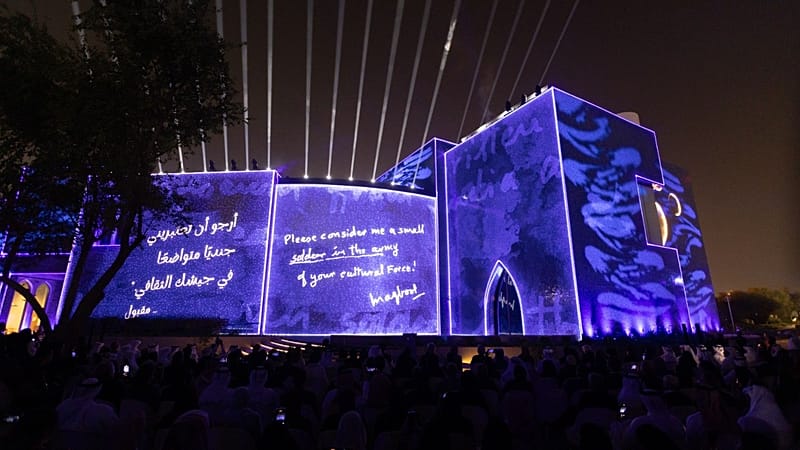
A bold blue museum inspired by a sketch drawn by M.F. Husain in 2008 has opened in Doha, showcasing six decades of his work and inviting visitors into the mind of one of India’s most iconic artists.
If you’ve ever wondered what it might feel like to step inside an artist’s imagination, Doha’s newest cultural landmark gets you pretty close. The story of Lawh Wa Qalam: M.F. Husain Museum begins, quite literally, with a sketch. The project not only honours Husain’s legacy but also aims to build cultural bridges between South Asia and West Asia.
Back in 2008, renowned Indian modernist Maqbool Fida Husain drew a simple outline of what he dreamed his museum could look like. Today, that idea has come to life as a striking blue building, complete with cutout shapes inspired by Arabic letters and a tower inspired by a minaret.
Bringing a sketch to life turning Husain’s drawing into an actual building wasn’t easy. Delhi-based architect Martand Khosla took on the challenge and says the sketch became the project’s starting point. “We had to extrapolate an architectural language and keep it true to the sketch,” Khosla says. “That’s what we worked on for most of the design.”
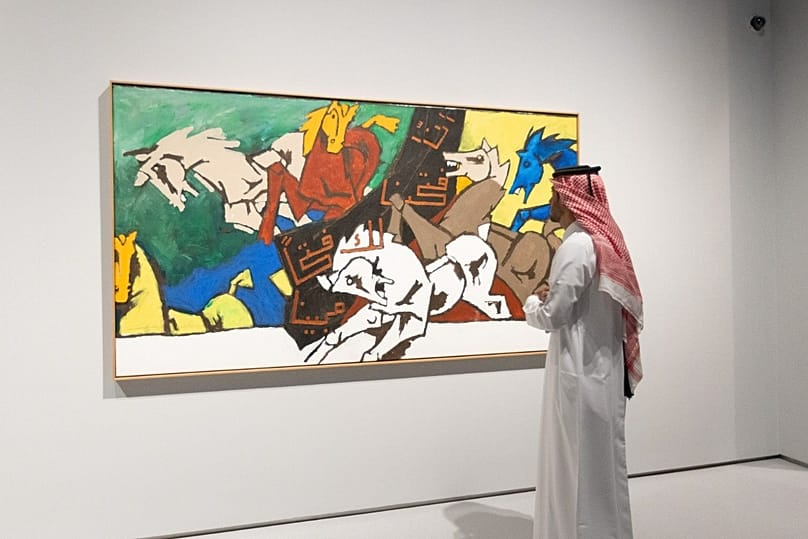
And the final result? A space where visitors can sense the artist’s energy before they even step inside. The museum showcases six decades of Husain’s work, including many of his later pieces inspired by Arab civilisation and Islamic culture.
For people in India, Husain’s art has been part of everyday life for decades and Khosla remembers growing up surrounded by it. “His works were everywhere,” he says. “In airports, convention halls, on postcards, calendars, even in people’s homes.” Now, the hope is that this museum in Doha’s Education City will introduce his work to entirely new audiences.
“Art comes from the heart”
Actor Taha Shah Badussha, who’s quickly rising in the Indian film industry, says Husain’s story still resonates with young creatives, especially those trying to carve their own path. “Besides being a legend, he started from nothing,” Badussha says. “He believed you shouldn’t paint because you need money, but because you have to. Art comes from the heart.” For him, the connection between creativity and purpose is stronger than ever. “Gone are the days when creativity was a side thing,” he says. “Art is what truly satisfies you from within.”
A vision beyond borders Husain’s life wasn’t without controversy. Some of his works sparked intense criticism, and he eventually lived in self-imposed exile in Qatar until his death in 2011. Still, he remained a giant in the art world, often called “India’s Picasso” for his bold style and fearless storytelling.
Now, his legacy has a permanent home. “I hope this museum becomes a new bridge between South Asia and West Asia,” Khosla says. “We’ve influenced each other for centuries. I’d be pleased if Husain’s syncretic vision is carried forward here."
Today