

Duck brigade replaces pesticides on wine farm in South Africa
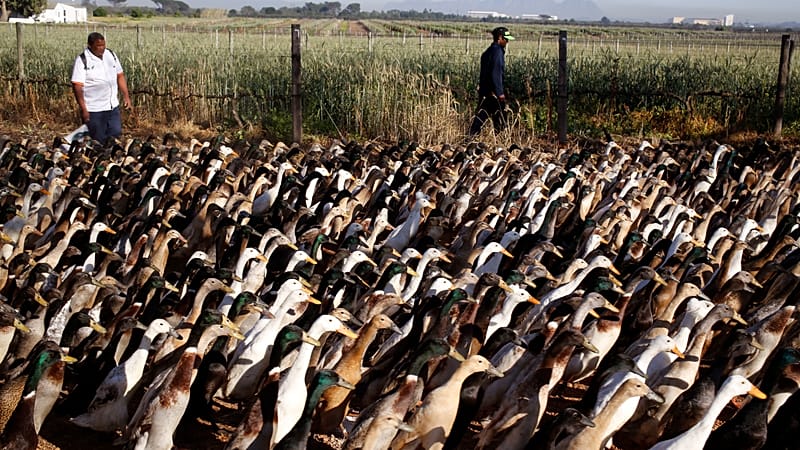
Twice a day, visitors to Vergenoegd Löw Wine Estate in South Africa’s Western Cape region can see over a thousand Indian runner ducks waddling off to work in the vineyards.
They are set to task, alongside sheep and cattle, at as part of the farm’s "regenerative" farming technique to tackle insects and trim down crops and weeds.
Estate and farm manager,Christiaan Cloete, says each has unique way of working in the vineyard.
“So the ducks would focus on insects. They'll help us with snails, aphids and, and any worms that there may be in the vineyards,” he says.
The cattle graze the cover crops while they are longer, shortening it to about half its size before the next group are brought in.
“The sheep will come in and they graze on the shortened grass and they actually eat more of the weeds, also during the winter period."
The vineyard has been using the ducks as chief “pest control officers” since the 1980s.
But it is part of a wider movement in the local industry towards more sustainable agriculture and eco-friendly practices.
Cloete says many farms have also begun using cattle inside of vineyards to graze.
“There is about ten wine farms that I know of that also used the runner ducks as pest control during the winter months," he says.
Another advantage of having the ducks, sheep, and cattle roam the vineyards is that they fertilise the soil as they make their way through the vineyards.
The estate’s ecology ranger, Milan Germishuizen, says it is crucial to look after the soil if you want to make a much better quality product.
"The more pesticides and artificial fertilisers you put onto your soil, eventually your soil will degenerate. So by using natural methods … we like to think that we, we are really looking after our soils,” he says.
While the ducks in particular are a huge drawcard for tourists, the historic estate is also one of the oldest in the Cape and makesaward-winning wines.
Most of South Africa’s wine comes from the Cape Winelands, which is also home to two global biodiversity hotspots.
Vergenoegd Löw is one of more than 60 wine farms in the area working with the WWF as Conservation Champions.
Today