

Putin touts battlefield gains, signalling war in Ukraine will continue
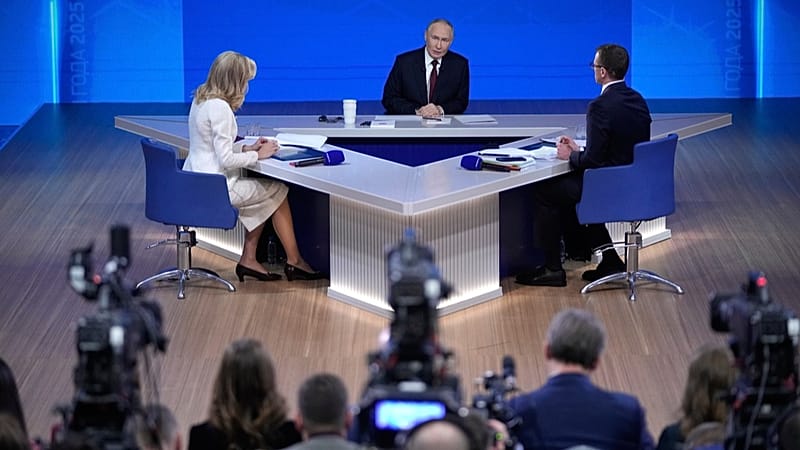
Russian President Vladimir Putin stated Friday that Moscow's troops were advancing across the battlefield in Ukraine, saying he was confident that the Kremlin's military goals would be achieved almost four years after he ordered the all-out invasion.
Speaking at his annual news conference combined with a nationwide phone-in show, Direct Line with Vladimir Putin, the Russian leader declared that his forces had "fully seized strategic initiative" and would make further gains by year's end.
"Our troops are advancing all across the line of contact, faster in some areas or slower in some others, but the enemy is retreating in all sectors," Putin told journalists and Russian citizens in the highly orchestrated event.
In the early days of the full-scale invasion in February 2022, Ukrainian forces managed to thwart Russia's attempt to capture Kyiv and pushed Moscow's troops out of large swaths of territory.
The fighting turned into grinding battles mostly in the east of Ukraine, and Moscow's troops have made further pushes, particularly in recent months. Putin frequently touts this as an advance, though it falls far short of the lightning victory many in Russia expected.
Putin, who has ruled Russia for 25 years, has used the annual event to cement his power and air his views on domestic and global affairs.
This year, observers watched closely for Putin's remarks on Ukraine and the peace plan proposed by US President Donald Trump. Despite an extensive diplomatic push, Washington's efforts have run into obstacles, mainly stemming from Putin's maximalist demands.
In turn, Putin said on Friday that Moscow was the one that was "ready and willing to end this (war) peacefully," stating that the Kremlin "truly has not seen readiness" from Kyiv to negotiate, especially on Russia's request that Ukraine hand over what amounts to one-fifth of its land.
'Root causes' to the fore once again
In his speech on Friday, Putin reaffirmed that Moscow was ready for a peaceful settlement that would address the "root causes" of the war, a reference to the Kremlin's list of reasons for the invasion which have also turned into its conditions for a deal.
Earlier this week, he warned that Moscow would seek to extend its gains if Kyiv and its Western allies reject these demands.
Russia wants all areas in the four key regions captured by its forces, as well as the Crimean peninsula, illegally annexed in 2014, recognised as Russian territory.
Putin has also insisted that Ukraine withdraw from all of the Donbas — the term for the area encompassing the Donetsk and Luhansk regions in eastern Ukraine — that Moscow's forces have not yet captured.
Kyiv has rejected all these demands, stating that Ukrainian territory as defined by its constitution cannot be legally relinquished.
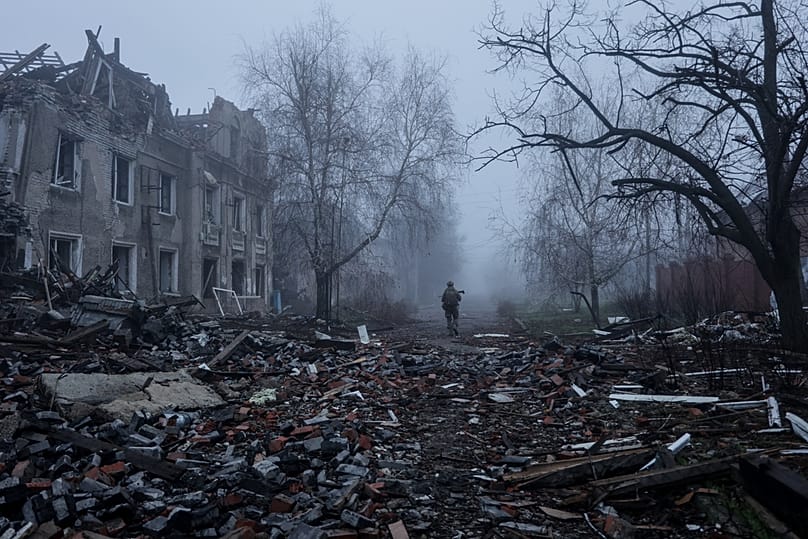
The Kremlin has also insisted that Ukraine abandon its bid to join NATO and warned that it would not accept the deployment of any troops from NATO members, viewing them as "legitimate targets".
Putin has also repeatedly said that Ukraine must limit the size of its army, another one of his demands he has made since the onset of the all-out war, when he stated Russia's goal was to "demilitarise" Ukraine.
Ukraine still needs US security guarantees
Kyiv and its allies have largely seen the demands as a possible stalling tactic and said that accepting them would enable Russia to launch another invasion after it consolidates its losses and improves its ailing economy.
Asked this week whether Ukraine could abandon its NATO bid, President Volodymyr Zelenskyy said his country's "position remains unchanged."
"The United States don't see us in NATO, for now," he said. "Politicians change."
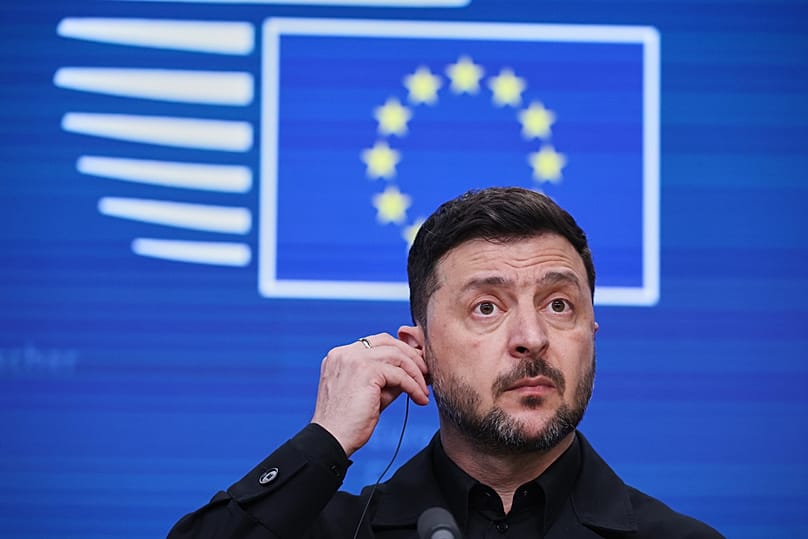
Answering a question from Euronews at the European Council summit in Brussels on Thursday, Zelenskyy said Russia is trying to exclude the European Union not only from the diplomatic negotiations but also from any future security guarantees for Ukraine.
European leaders vowed to protect Ukraine from Russia in the future, including by military means, at a meeting in Berlin on Monday.
Yet Europe’s commitment, even legally binding to assist Ukraine in case of a future Russian attack, cannot replace the US security guarantees for Ukraine, Zelenskyy added.
“We do not believe that Europe should replace the United States of America. And, of course, we feel the same way about the security guarantees of the United States of America, which will be Article 5-like, and we will not need European support.”
Russia's grinding war of attrition across the front line and attacks on Ukraine's energy facilities, cities and other civilian targets with scores of drones and missiles are part of a broader strategy to wear Kyiv down and into submission, a repeat of its campaign banking on harsh Ukrainian winters.
EU leaders agree to disagree on Russian assets
On Friday, European Union leaders agreed to provide a €90 billion interest-free loan to Ukraine for 2026 and 2027, but they failed to use frozen Russian assets to raise the funds after Belgium raised legal and financial concerns.
The plan had been to use some of the €210 billion worth of Russian assets frozen in Europe, mostly in Belgium, whose Prime Minister Bart De Wever repeatedly rejected the idea, citing fears of retaliation from Moscow.
But the leaders worked deep into Thursday night trying to reassure Belgium it would be protected. As talks bogged down, the 27-member bloc eventually opted to borrow the money on capital markets.
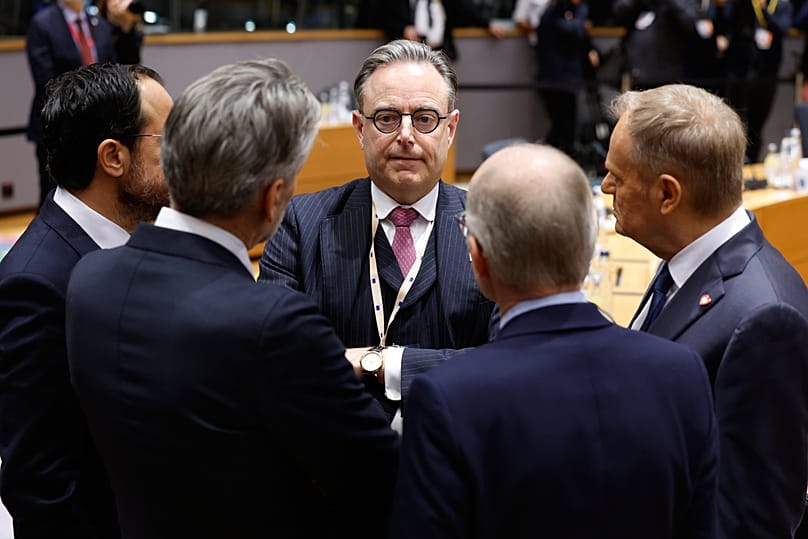
De Wever had rejected the scheme as legally risky, warning it could harm Euroclear, the Brussels-based financial clearing house where €193 billion in frozen assets are held.
Putin commented that using the Russian assets to help Kyiv would amount to "robbery," adding that the move would spook investors, "dealing not only an image blow but undermining confidence in the eurozone."
Earlier in the week, the Russian president accused the "European swine" of colluding over "Russia's collapse," in one of his most scathing attacks on Western leaders, who he blames for Moscow's war in Ukraine without providing evidence.
The frozen assets will remain blocked until Russia pays war reparations to Ukraine, which have been estimated to over €600 billion.
Today