

Made in Germany? Why the Bundeswehr doesn't buy all its weapons at home
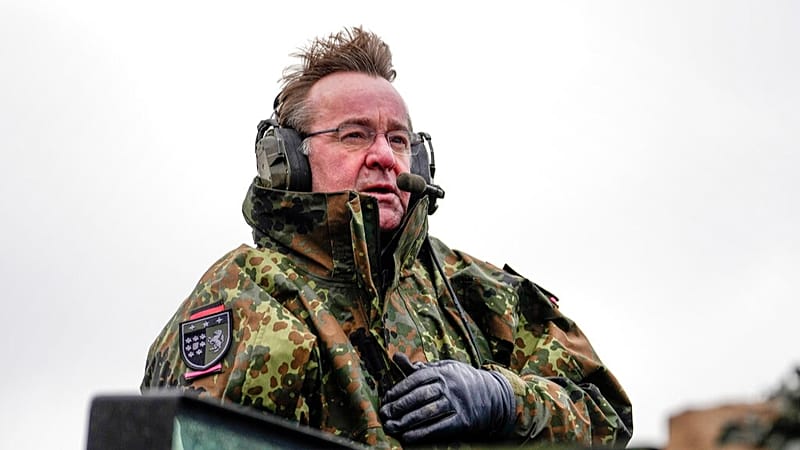
Germany spent €24 billion on military procurement in 2025, prioritising European suppliers while continuing to rely on US systems where domestic capabilities fall short, in order to deliver equipment quickly and modernise its forces.
The end-of-year Bundeswehr 2025 report suggests that modernisation has made progress despite strong demand, largely thanks to streamlined procedures and a large number of Bundestag approvals. Funded mainly through the special defence fund, the armed forces implemented 149 procurement projects, alongside the acquisition of numerous new systems that have either already been delivered or are currently being introduced.
The army received particular attention this year, with further deliveries of the Puma infantry fighting vehicle, produced by German defence firms KNDS Deutschland and Rheinmetall Landsysteme.
Not all equipment for the German Armed Forces is manufactured in Germany. Most procurement contracts are awarded to European suppliers, while only around 8% are sourced from the United States, as Euronews reported in September.
Where Germany's capabilities reach their limits
Weapons systems not manufactured in Germany include the F-35 fighter jets, the P-8A Poseidon maritime patrol aircraft for the navy, and Tomahawk cruise missiles from the United States.
At the same time, procurement is also taking place within Europe. One example is the replacement of the Bundeswehr’s P8 service pistol with the Czech-made CZ P13. Alongside German air defence systems such as IRIS-T, the Bundeswehr has also acquired the Arrow-3 missile defence system, developed jointly by the United States and Israel.
These systems are considered vital to the Bundeswehr's capabilities. The F-35, in particular, cannot be produced outside the US due to the highly complex and sensitive technologies involved.
In addition, specialised production facilities, strict export controls such as the International Traffic in Arms Regulations (ITAR), and broader strategic considerations prevent the aircraft from being manufactured
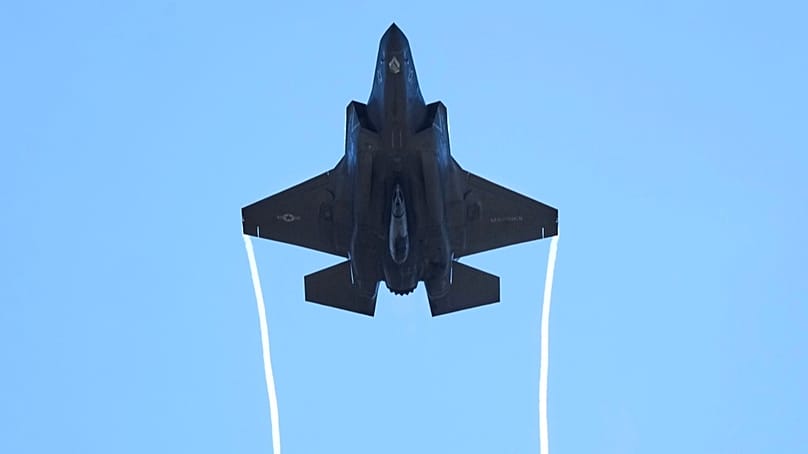
European alternatives to the F-35, such as Sweden's Gripen, have also been considered.
A replacement is far from straightforward, though. According to reports, the F-35A – the model the Bundeswehr is set to receive – is certified to carry the US B61-12 nuclear bomb, which gives the aircraft the ability to deploy both conventional and nuclear weapons. It's therefore a potential successor to ageing nuclear-capable platforms such as the Tornado, within NATO's nuclear-sharing arrangements.
Another option has been the Franco-German-Spanish Future Combat Air System (FCAS), which aims to redefine the future of air combat while reducing dependence on non-European partners.
Although all three governments remain politically committed, persistent industrial disputes – particularly between Airbus and Dassault Aviation over leadership and work-share in the Next Generation Fighter – continue to slow progress.
FCAS is not intended to be a single fighter jet, but a fully networked "system of systems", combining a manned aircraft, unmanned escort drones and a digital combat cloud.
The first flight of the new jet is not expected before around 2030, with operational service more likely from 2040. Even so, it remains uncertain whether the programme will stay on schedule or within budget.
A political balancing act
Although around 80% of defence equipment is procured in Germany, achieving full independence remains politically difficult.
At a NATO meeting in early December, US Deputy Secretary of State Christopher Landau criticised European countries for prioritising their own defence industries over American suppliers. He urged Europe to turn defence spending into tangible military capabilities and warned against excluding US companies from the market.
The recently published US National Security Strategy echoes this stance, stating that "from military alliances to trade relations and beyond, the United States will insist on being treated fairly by other countries."
"We will no longer tolerate, and can no longer afford, free-riding, trade imbalances, predatory economic practices, and other impositions on our nation’s historic goodwill that disadvantage our interests," the strategy reads.
In an interview with Euronews, retired United States Army officer who served as commanding general of the United States Army Europe, Ben Hodges, said that decisions on where Germany buys its defence equipment should "first and foremost be driven by what gives the Bundeswehr the best capability".
He did acknowledge though that there are systems Germany is currently unable – or unwilling – to produce itself.
Security expert Dr Christian Mölling told the German newspaper Bild that producing equipment exclusively in Germany is not realistic given the time constraints.
According to Mölling, manufacturing the new service pistol domestically would have required the construction of new factories, advance government funding, and significantly more time.
Standardisation of European defence capabilities
Another driver behind European procurement is the push for greater standardisation and closer cooperation between the continent's armed forces.
The EU is promoting joint defence procurement to bring greater coherence to Europe's highly fragmented equipment market and to reduce duplication. When multiple armies operate the same – or compatible – systems, joint operations become significantly easier.
To that end, initiatives such as EDIRPA and the European Defence Industry Programme (EDIP) are designed to encourage member states to move away from isolated national purchases and towards collective investment.
The aim is a more coordinated European defence industry and greater technical harmonisation of weapons systems. In the long term, the EU argues, this would not only improve efficiency and solidarity but also deepen Europe's military integration and strengthen its capacity for collective defence.
Today