

EU takes on Big Tech: Here are the top actions regulators have taken in 2025
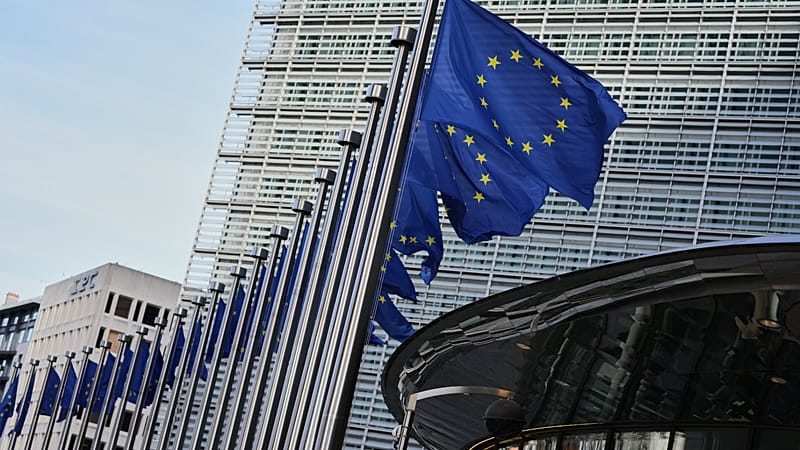
European regulators are intensifying their crackdown on major technology companies, deploying new digital laws to curb Big Tech's power and protect consumers.
With landmark legislation seeking to protect user rights and level the playing field for businesses – including the AI Act, Digital Services Act (DSA), and Digital Markets Act (DMA) – the European Union has established itself as a global leader in tech regulation.
This year, the bloc has stepped up enforcement of these rules to rein in the power of companies such as Amazon, Apple, Google, Meta, and Microsoft.
Euronews Next has rounded up some of the major actions the EU has taken against Big Tech.
1. Google antitrust investigation
On December 9, the European Commission opened a formal antitrust investigation into Google's use of online content to train its artificial intelligence (AI) models and produce overviews on search results pages.
The EU’s executive branch raised concerns that Google was scraping content from web publishers without appropriate compensation and without giving them an option to opt out.
Many websites rely on advertising revenue to operate and depend on the number of page clicks generated through search engines such as Google.
The probe will also look into whether Google used video content from YouTube to train its generative-AI models without compensating creators or allowing them to opt out.
“Google does not remunerate YouTube content creators for their content, nor does [it] allow [sic] them to upload their content on YouTube without allowing Google to use such data,” the Commission wrote in a statement.
If proven, these actions could breach EU competition rules preventing “abuse of a dominant position”.
A Google spokesperson said that the complaint "risks stifling innovation in a market that is more competitive than ever".
"Europeans deserve to benefit from the latest technologies and we will continue to work closely with the news and creative industries as they transition to the AI era," the spokesperson added.
2. Google slapped with €2.95 billion antitrust fine
The EU’s new antitrust investigation against Google comes just months after the EU hit the company in September with a massive fine for breaching its antitrust rules – saying it illegally favoured its own digital ad services.
The €2.95 billion fine is the fourth penalty EU competition regulators have levied against Google over the past decade.
"Google must now come forward with a serious remedy to address its conflicts of interest, and if it fails to do so, we will not hesitate to impose strong remedies," EU Competition Commissioner Teresa Ribera said in a statement.
"Digital markets exist to serve people and must be grounded in trust and fairness," she added.
The decision, which Google called “unjustified,” was also slammed by US President Donald Trump, who said it was “discriminatory” and “unfair”.
Trump wrote on social media: “The European Union must stop this practice against American Companies, IMMEDIATELY!”
The US President previously threatened retaliatory tariffs against governments with overly restrictive digital regulations.
3. Meta agrees to give EU users a choice on personalised ads
On December 8, the European Commission announced a victory against Meta, saying the US tech giant agreed to give users in the EU the option to see less personalised ads on Facebook and Instagram.
“This is the first time that such a choice is offered on Meta’s social networks,” the Commission said in a statement.
Meta had been under pressure to change its advertising settings to comply with the DMA, after the Commission issued the company a non-compliance decision regarding user choice in April.
The company said that starting in January 2026, it would give EU users the choice between sharing all their data to see fully personalised advertising or sharing less data to see more limited personalised ads.
4. Elon Musk’s X hit with €120 million fine for lack of transparency
In what turned into the most acrimonious showdown of the year, the European Commission slapped a €120 million fine on the Elon Musk-owned social media platform X for breaking the bloc’s digital rules on transparency – igniting Musk’s ire.
The December 5 decision was the first fine made under the DSA, following a two-year investigation.
The Commission cited breaches including the company’s deceptive use of its blue “verified” checkmark, the lack of transparency regarding its ads, and its failure to provide access to public data for research purposes.
In response, Musk called for the EU to be “abolished” in a post on his X account. X also blocked the Commission from making advertisements on its platform.
Two other EU investigations against X are still ongoing – one regarding how X is dealing with illegal content and another focusing on the company’s algorithm recommendations, particularly regarding radicalisation.
5. Apple fined 500 million euros, Meta fined 200 million euros for breaching DMA rules
In April, under the EU Big Tech antitrust law, Apple and Meta were fined €500 million and €200 million, respectively, for not complying with the DMA.
The fines came after a year-long investigation by the European Commission concluded that Apple was preventing app developers from freely communicating with consumers, and that Meta’s “pay or consent” advertising model forced users to give up their personal data unless they pay a subscription.
Both Apple and Meta criticised the EU decision.
"This isn't just about a fine; the Commission forcing us to change our business model effectively imposes a multi-billion-dollar tariff on Meta while requiring us to offer an inferior service," said Meta’s Chief Global Affairs Officer Joel Kaplan.
EU regulators say they won’t back down
Despite criticism from the US and companies around the world, Ribera has stood firm in her resolve to continue holding tech companies accountable under the bloc’s digital regulations.
"It is our duty to remind others that we deserve respect,” Ribera said.
“I don't enter into how they regulate the health standards in the US market, but I am in charge of defending the well-functioning digital markets in Europe and it is not related at all with any type of joint conversation," she added.
Today