

Footballers face longer recovery times if injured during their period, study finds
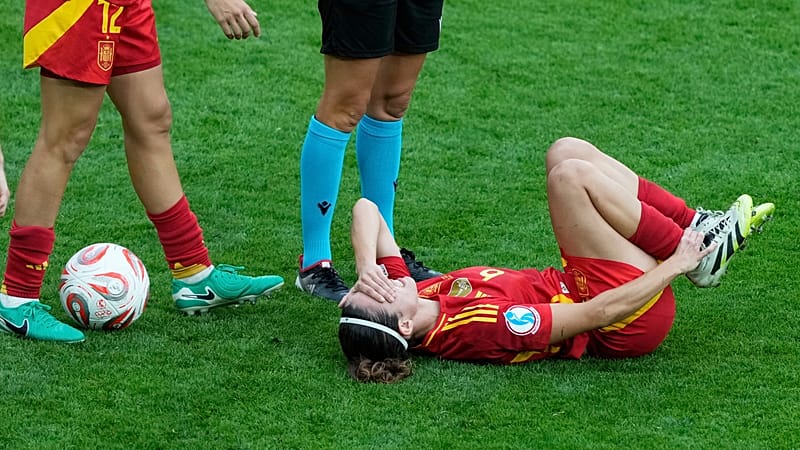
Female footballers who got injured while in their period experienced more severe injuries and longer recovery times, according to a new study.
The findings, published on Tuesday in the journal Frontiers in Sports and Active Living, show that while menstruation does not increase the risk of harm, it is linked to worse consequences when players do get injured.
Researchers followed FC Barcelona women’s players during four seasons between 2019 and 2023 – while they played for the Spanish professional national league.
“We show that menstruation itself does not increase how often injuries happen,” said Eva Ferrer, lead author of the study and specialist in sports medicine and female health at Sant Joan de Déu Hospital and Barça Innovation Hub in Barcelona.
She added that injuries sustained during menstruation led to three times more days lost due to recovery than those occurring at other points of the cycle.
For example, the recovery time of soft tissue injuries to muscles, tendons, and ligaments took more than three times as long when experienced during bleeding days compared to non-bleeding days – 684 versus 206 days lost per 1,000 training hours, respectively.
“Small modifications such as longer warm-ups, adjusted high-speed workload, or added recovery support may help reduce the severity of injuries if they occur,” said Ferrer.
How does the menstrual cycle change the body?
During the menstrual cycle, levels of hormones rise and fall, affecting different parts of the body, including muscles, metabolism, and the immune system.
Low estrogen levels can affect the muscles’ ability to repair themselves and increase fatigue, pain, and sleep problems. At the same time, iron loss can reduce stamina and slow recovery.
It is not the first time that hormonal changes have been linked to worse outcomes in sports injuries, particularly among female footballers.
The International Federation of Association Football (FIFA) has funded a separate study that began earlier this year to investigate the link between the menstrual cycle and anterior cruciate ligament injuries in women’s football.
“We know hormones fluctuate during different phases of the cycle but we don’t yet know how much of an influence that may have on the risk of injury,” Simon Augustus, a researcher in the project, said in a statement.
The research team will specifically monitor oestrogen and progesterone levels – hormones previously linked to increased ligament laxity and decreased neuromuscular reaction times.