

Syrians who came home after al-Assad's fall find a complicated reality
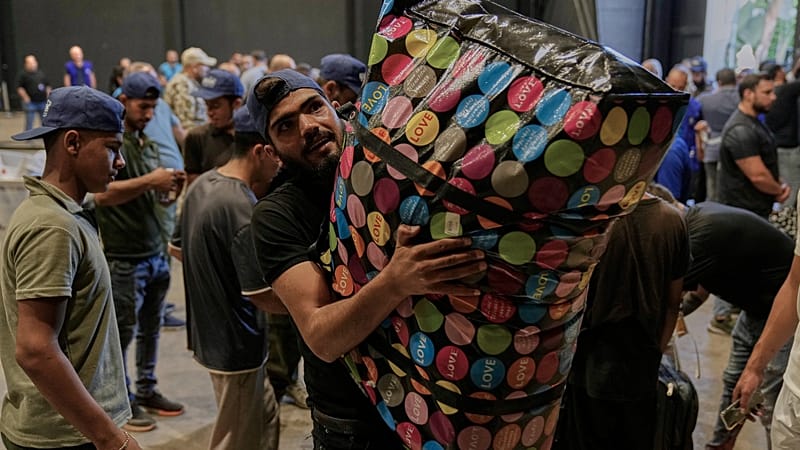
Nearly two years after Bashar al-Assad's ouster, the Syrians who rushed to go back home are discovering that what they left behind is no longer what they remember — and that coming home to a country fresh out of war comes with its own challenges.
"I regret coming back," Samer told Euronews. "In Turkey I was making about $1,000. Today my income doesn't surpass $250-300."
Samer* returned from Turkey after the fall of al-Assad's regime. His colleague Mustafa returned from Egypt at the same time. Working side by side in the same Damascus barbershop, they have reached opposite conclusions about whether they made the right choice.
Mustafa lives in his family home and pays no rent. He is back working for the barber who trained him. There he earns around $300 a month, or roughly twice what remained after Cairo rent ate into his Egyptian wages. He does not regret coming back.
Samer does. "My dream is to be able to buy a motorbike for $400, and I still can't, just so I can save on transport fares," he said.
"I ran into a harsh reality. Barbershops here do not offer the services I used to provide, and the wages are so low they do not even cover the cost of getting from my home in Maraba, in rural Damascus, to the Mezzeh district in the heart of the capital, a distance of around 20 km," he explained.
"My whole life has changed: the cost of living is high, infrastructure is weak and there are constant power cuts, and electricity is essential to the work of a barber."
The end of al-Assad's rule in December 2024 prompted one of the fastest mass returns of refugees and displaced people in recent history.
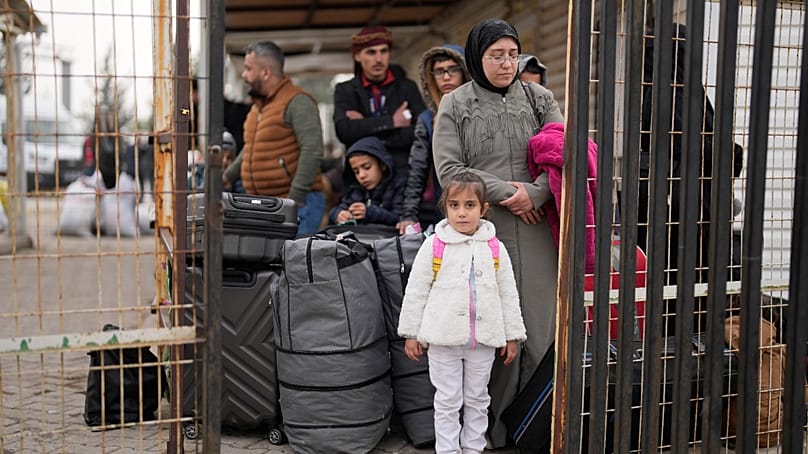
By the end of May 2026, UNHCR counted roughly 1.67 million Syrians who had returned from neighbouring countries, alongside 1.92 million internally displaced people who had gone back to their areas of origin.
That adds up to nearly 3.6 million people mostly in Aleppo, Idlib, rural areas near Damascus and the capital itself.
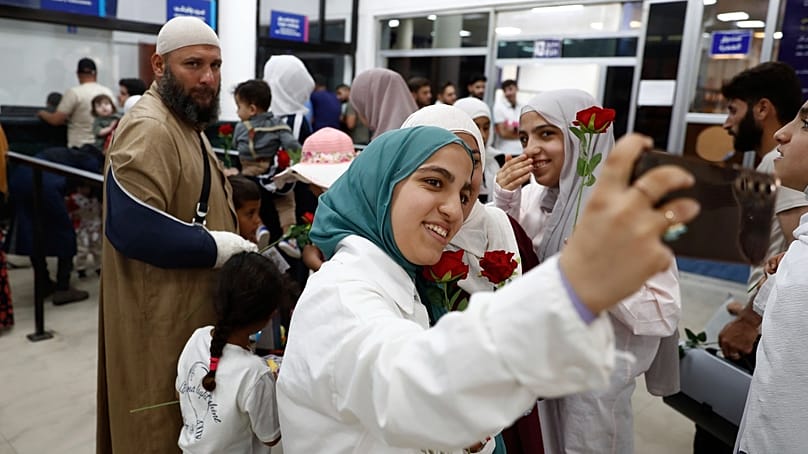
They all returned to a country the World Bank estimates has sustained $108 billion in direct physical damage, with reconstruction needs of around $216 billion — or roughly 10 times Syria's entire GDP in 2024.
Homes remain damaged or destroyed, power cuts are frequent, civil administration is dysfunctional and formal employment is scarce.
Caught between two worlds
Mawia al-Shaer came back from Germany with her three children, the eldest 10, the youngest six. All had studied in German, but they are now in Arabic-language schools following a curriculum they have never come across before.
"There is a big difference between schooling in Syria and in Germany," al-Shaer told Euronews. "Private schools are extremely expensive here, whereas in Germany the service was free."
Private schools in Damascus charge at least $2,000 per child per year. State schools are overcrowded. Al-Shaer cannot afford the first and does not trust the second.
"This will make my children feel withdrawn and afraid and unwilling to go to school," she said.
"Everything will change for them: the overcrowded classrooms, their inability to express themselves, which may expose them to bullying or class prejudice because of the different language and way of thinking they acquired in Germany," al-Shaer added.
She now wishes she had visited her relatives and returned to Germany before the new school year began.
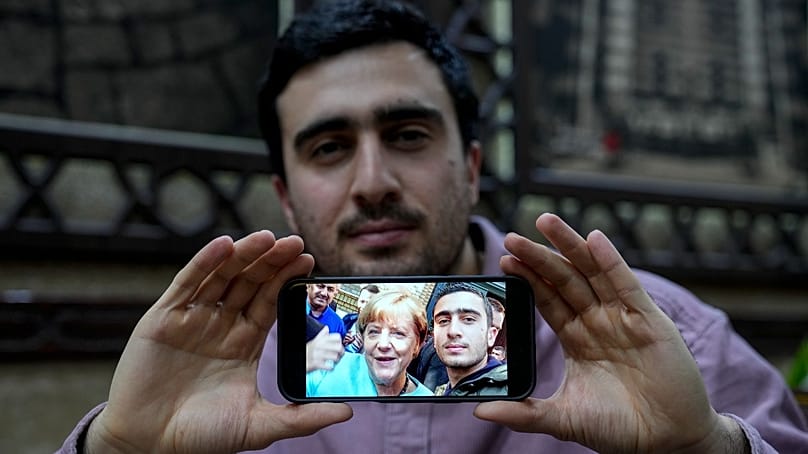
Amer Hassan arrived from Germany with more than $45,000 in savings. He wanted to open a restaurant. He paid rent, started fitting out the space and ran out of money before it opened.
"I got roughly halfway and then it all came to a halt," Hassan told Euronews. "I couldn't complete what I had dreamed of."
"If I had been in Germany, I would have received government support in the form of loans, and with half the money I spent I could have launched the business," he added.
"Rents are extremely, extremely high, and labour costs are also high. I've gone back to square one."
He holds German citizenship and he said he plans to go back.
"I will return and try to start over there," Hassan explained. "Here I have run out of options and lost what I had built up during my stay and asylum in Europe."
Fares Ibrahim and his wife Lida returned from Sweden and opened a tailoring shop in Damascus's Shaalan district.
They put $10,000 into rent and $5,000 into equipment. Six months later, they had made less than $1,000 in profit, so they were forced to close the shop.
"We are now looking for premises in a rural area where the rent is lower, so we can get back on our feet," Ibrahim told Euronews.
The wall of bureaucracy
Munir is a teacher who came back from Jordan. He has spent months trying to secure a position through Syria's education ministry, but nothing has come through.
"Every month I knock on the doors of the ministry or the education directorate to see whether my appointment has gone through, but in vain," Munir told Euronews.
"There is never a response, every time there's a different excuse." He has stopped waiting and taken up farming.
"I have now stopped teaching and am working the land, doing farming and sowing seeds just to get by," he explained.
"I have set aside my experience and years of study in Jordan, and I wish I could work in Syria instead of having to think about travelling in search of a teaching post in good schools that also pay decent salaries."
Said Mahrouz returned from Sweden with a master's degree in computer engineering. The first eight months, he said, "were hell".
He sold his mother's jewellery to raise capital, spent months on licences and paperwork, and at one point considered going back.
Today he runs a small programming and networking company. "The Syrian market needs a lot, but you have to understand it first," he said.
"The business began to stabilise, and now I only consider travelling to attend international fairs that can help develop my company."
Kamal Kikhiya has lived in Germany for 15 years. He spoke to friends and relatives who went back. He has decided not to join them.
"They all feel regret. Some returned to destroyed villages, others couldn't even manage to open a small supermarket," Kikhiya told Euronews.
He has a six-year-old son in German school. "I cannot gamble with my family's future in a country whose future is still so uncertain."
*Euronews has used first names or pseudonyms for Samer, Mustafa and Munir at their request, to protect their privacy and personal safety.
Today