

Meta agrees to pay $17bn in landmark US child-safety settlement deal
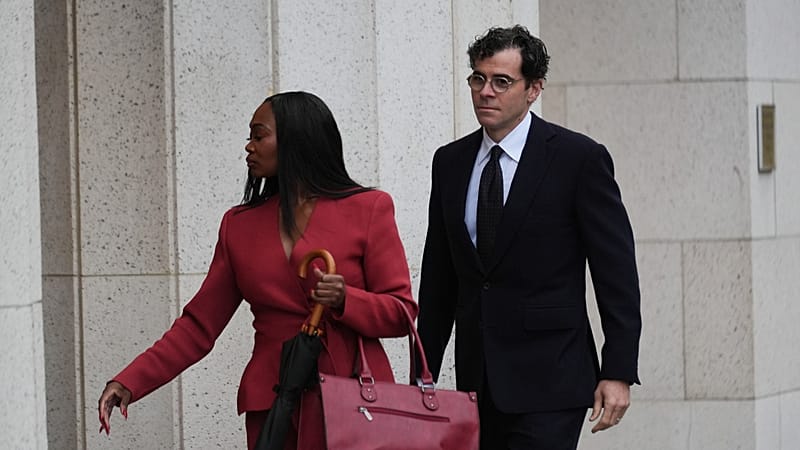
Meta has agreed to pay $17 billion (€14.6bn) and add child-safety measures to its Facebook and Instagram platforms to end a landmark trial over teen social media addiction and settle claims filed by 47 states, state attorneys general announced on Wednesday.
California, Colorado, Kentucky and New Jersey were among 29 states that sued the tech giant in 2023, but the deals have now cut the trial short.
Child safety advocates were hoping to see chief executive Mark Zuckerberg take the stand before a jury in federal court in California.
The settlement is worth $353 million (€302m) in Virginia alone and is one of the biggest in the history of US state consumer protection, according to attorney general Jay Jones.
"For years, Meta intentionally deceived the public about the addictive and harmful design features that have wreaked havoc on youth mental health," Jones said in a statement.
The settlement "will put an end to these dangerous practices and deliver meaningful relief that will protect children from online harm".
The $17 billion (€14.6bn) settlement is a fraction of the company's 2025 revenue of $201 billion (€172bn).
Why was Meta on trial?
The lawsuit accused Meta of contributing to the youth mental health crisis by deliberately designing features that make children addicted to its platforms and of hiding this knowledge from the public.
It also argued that Meta violated federal law by routinely collecting data on children under 13 without parental consent.
The trial began last week in Oakland, California, with US District Judge Yvonne Gonzalez Rogers overseeing proceedings.
Cases in other states had been expected to go to trial later. Nine attorneys general also filed lawsuits in their respective states.
Under the proposed settlement, Meta has agreed to adopt a series of safety features, including a "hard cap" on daily time limits and pauses for children using Instagram and Facebook.
The company will eliminate push notifications during weekday school hours and introduce "robust" age-assurance measures and "age-appropriate" content controls to prevent bullying and harmful material relating to eating disorders and self-harm.
Stronger, more user-friendly parental controls and limits on social comparison features, such as "like" counts, will also be introduced.
Instagram under fire
Adam Mosseri, the head of Instagram, began testifying late on Tuesday and defended Meta's record and progress on child safety and privacy..
Mosseri pushed back as prosecutors pointed to the low take-up of safety tools among young users, including Instagram’s Take a Break feature, which prompts users to step away after scrolling for a certain amount of time.
He said “most teens didn’t want it”, but that “we [Instagram] decided to push forward with it anyway”. An internal memo shared earlier in court that day showed that Meta and Instagram knew opt-in safety features such as Take a Break were not effective.
Mosseri appeared frustrated by the prosecution’s focus on the feature. He acknowledged that some of Instagram’s safety measures work while others do not, adding that there are “no silver bullets” when it comes to safety.
He also argued that “there are many features we launch over many aspects of safety and well-being” that the company seeks to improve over time, including ‘Quiet Mode’ and ‘Take a Break’.
States led the charge
The high-profile case was brought by a coalition of 29 state attorneys general, including those from California, Colorado, Kentucky and New Jersey. They argue that the social media giant deliberately designed features to hook children, including infinite scrolling, push notifications and “like counts”, contributing to a youth mental health crisis.
The ‘Take a Break’ feature is an in-app tool launched in 2021 that reminds users to step away from scrolling after a set amount of time, with alerts after 10, 20 or 30 minutes of continuous use. It was initially optional before becoming a default setting for teenage accounts in September 2024.
Instagram’s ‘Quiet Mode’, launched in January 2023 and sometimes referred to as ‘Sleep Mode’, silences notifications and works in a similar way to a do-not-disturb setting. It also sends automatic replies when someone tries to contact a user while the feature is activated.
Meta, which owns Instagram, Facebook, WhatsApp and Threads, has also been accused of covering up its own internal findings showing that its platforms are addictive and psychologically damaging to teenagers, as well as failing to warn parents and protect children.
Mosseri was also questioned about the so-called ‘Facebook Files’, documents shared by former Meta employee and whistleblower Frances Haugen with the Wall Street Journal in 2021.
The leaked documents revealed that Meta was aware of the platform’s impact on teenagers’ mental health and had done little to address criminal activity and the spread of misinformation.
Big Tech’s Big Tobacco moment
The latest trial follows two other lawsuits involving Meta this year, with the company facing thousands more legal claims.
In March, a Los Angeles jury found Meta and Google liable in a separate trial in which Mark Zuckerberg testified, awarding $6 million in damages to a 20-year-old woman referred to as 'KGM'. Meta was held responsible for 70% of the damages.
Her lawyers argued that her compulsive use of YouTube and Instagram since childhood had contributed to severe body dysmorphia, major depression and suicidal ideation."
In another case brought by the State of New Mexico, Meta was fined $375 million (€321 million) in March for allegedly misleading parents and minors about platform safety, and $567 million (€486 million) earlier this month for being a public nuisance.
The court also ordered structural reforms to the company, including measures relating to time restrictions and age controls.
Today