

Indonesian rescuers search for survivors as death toll from floods and landslides rises to 442
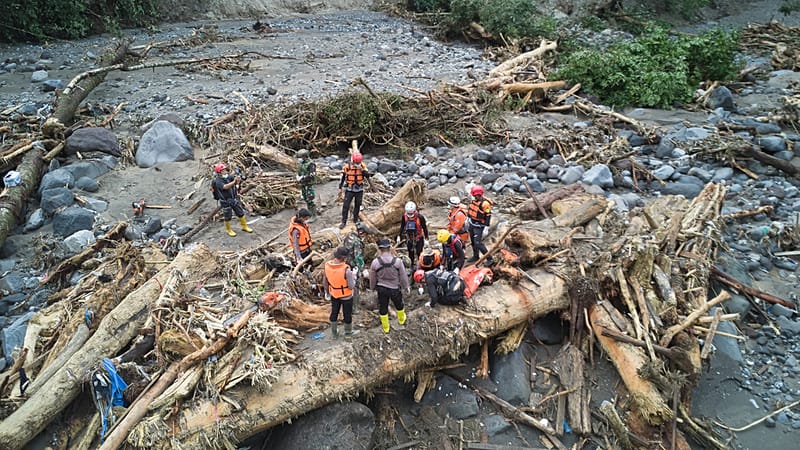
Authorities in Indonesia on Sunday reported the death toll from floods and landslides in the country has risen to 442 people, even as emergency services continue their frantic efforts to access portions of the hardest-hit Sumatra island, where thousands of people were left without essential supplies.
According to the National Disaster Management Agency (BNPB), some 402 people were still missing after initial rescue efforts were hampered by a lack of heavy equipment.
“The death toll is believed to be increasing, since many bodies are still missing, while many have not been reached,” said Suharyanto, the head of the government’s disaster relief agency, who, like many Indonesians, only uses one name.
Parts of Sumatra, known for its lush rainforests, volcanoes, and mountain ranges, were cut off by damaged roads and downed communications lines and relied on transport aircraft to deliver aid supplies.
The floods were the latest natural disaster to hit Indonesia, which is frequently struck by earthquakes, volcanic eruptions, and tsunamis because of its location on the “Ring of Fire,” an arc of volcanoes and fault lines in the Pacific Basin.
Monsoon rains caused rivers to burst banks
The devastating floods and landslides came after monsoon rains over the past week caused rivers to burst their banks.
The deluge tore through the mountain villages, swept away people, and submerged thousands of houses and buildings in the three provinces of North Sumatra, West Sumatra, and Aceh.
The death toll in North Sumatra rose to 166, while 90 people died in West Sumatra. Rescuers also retrieved 47 bodies in Aceh, said Suharyanto, head of the National Disaster Management Agency. About 59,660 displaced families fled to temporary government shelters.
Authorities used cloud seeding, which involves dispersing particles into clouds to create precipitation, to redirect rainfall away from the areas where search and rescue efforts were ongoing, said Suharyanto, who goes by a single name like many Indonesians.
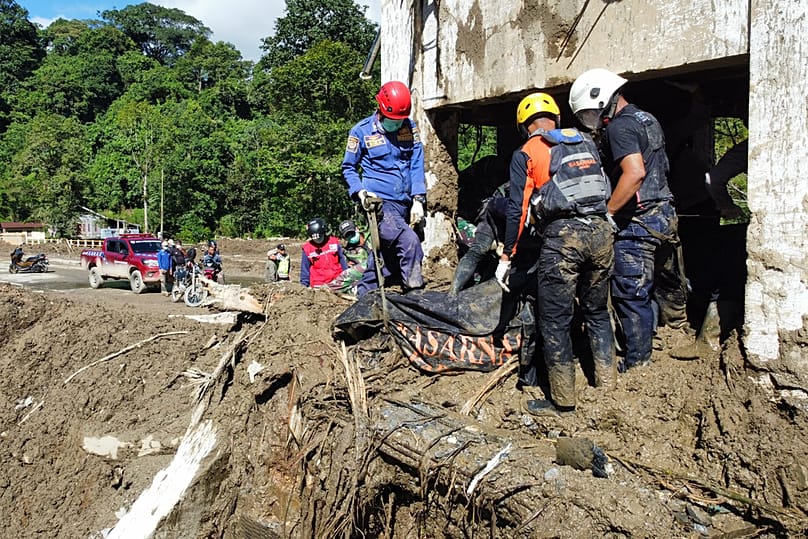
In the Agam district in West Sumatra province, nearly 80 people were missing in three villages, buried under tons of mud and rocks. There was a desperate need for heavy equipment to reach possible survivors. Relatives wailed as they watched rescuers pull bodies from a buried house in Salareh Aia village.
Images also showed massive piles of logs washed ashore on West Sumatra’s Air Tawar Beach, sparking public concern over possible illegal logging that may have contributed to the disaster.
In Aceh province, on the northern tip of Sumatra, authorities had difficulty deploying tractors and other heavy equipment. Hundreds of police, soldiers, and residents dug through the debris with bare hands, shovels, and hoes as heavy rain pounded the region.
Government authorities in the area declared a state of emergency till 11 December, with Governor Muzakir Manaf saying, "There are many challenges."
"We need to do a lot of things in the near future, but the circumstances prevent us from doing so."
Local media said that flash floods in the Bireuen district in Aceh collapsed one bridge, paralysed two-way transportation from North Sumatra’s Medan city to Banda Aceh, and forced residents to cross the river from village to village by boat.
In Indonesia, an archipelago of 17,000 islands where millions of people live in mountainous regions or close to rich river plains, seasonal rains often result in flooding and landslides.
Today